![Reveel-Logo-NoTagline-RGB-2.png]](https://help.reveelgroup.com/hs-fs/hubfs/Reveel-Logo-NoTagline-RGB-2.png?height=40&name=Reveel-Logo-NoTagline-RGB-2.png)
The Minimum charge is a price floor established by carriers to ensure they can cover their operational costs, even when discounts are applied to your agreements. As a result, regardless of your discount percentage for a particular service, the net charge for your package will never fall below this threshold. This structure prevents you from fully benefiting from the discounts in your agreement while allowing carriers to cover essential operational expenses like fuel, labor, and overhead, particularly for smaller or lightweight shipments that would otherwise yield minimal revenue.
Take this as a simple example:
You have a package that costs a list rate of $10.
You have a 50% discount on that $10 package.
You would expect that your net rate for that package would be $5, but the carrier has a minimum charge for that service of $7.
Hence you will be paying $7 instead of $5
In this scenario, you’re actually only realizing a 30% discount, and you’re paying $2 per package more than you would expect given that you have a 50% discount.
This is a particularly important metric to take into consideration when negotiating your carrier agreement because if you have lightweight packages that don’t travel very far, then you’ll hit the Minimum charge more often. The carrier could offer you better percentage discounts on their services, but that won’t do anything to help you lower your costs because of that Minimum charge. One effective way to address this issue is to negotiate a reduction in the minimum charge within the carrier agreement.
Here's an article to learn more about the Minimum Reduction:
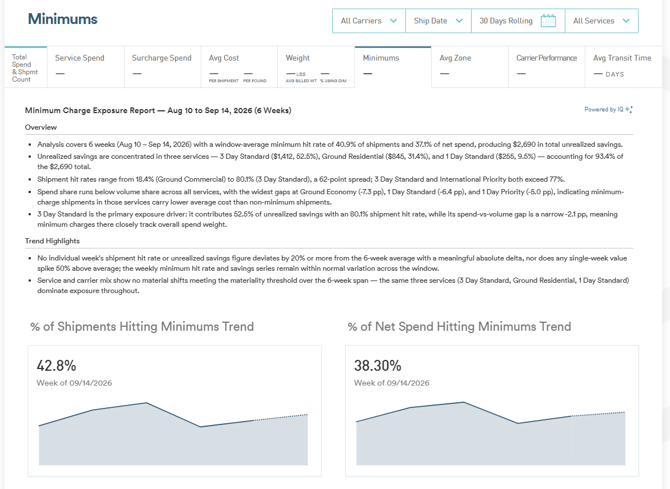
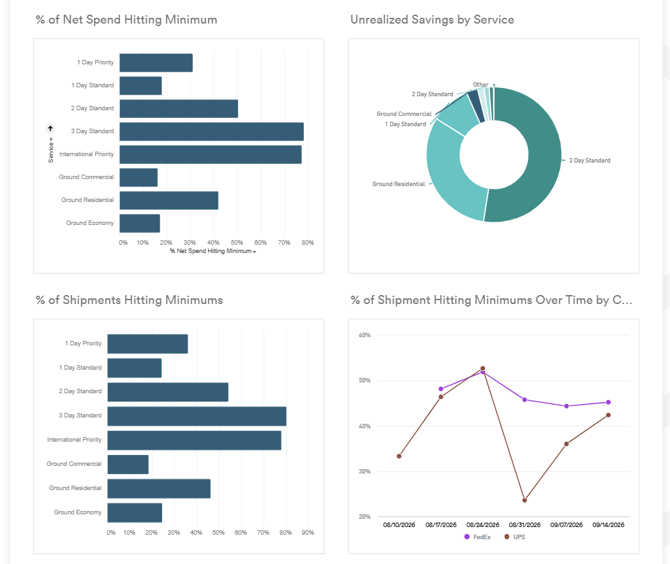
Reveel makes it easy for you to understand how much this impacts your business and shows you how you’re doing in managing this vital metric with this VitalFactors™ card.
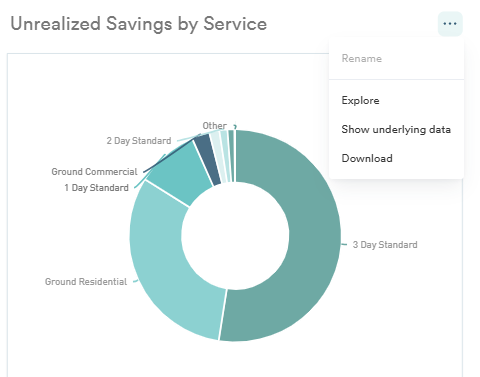
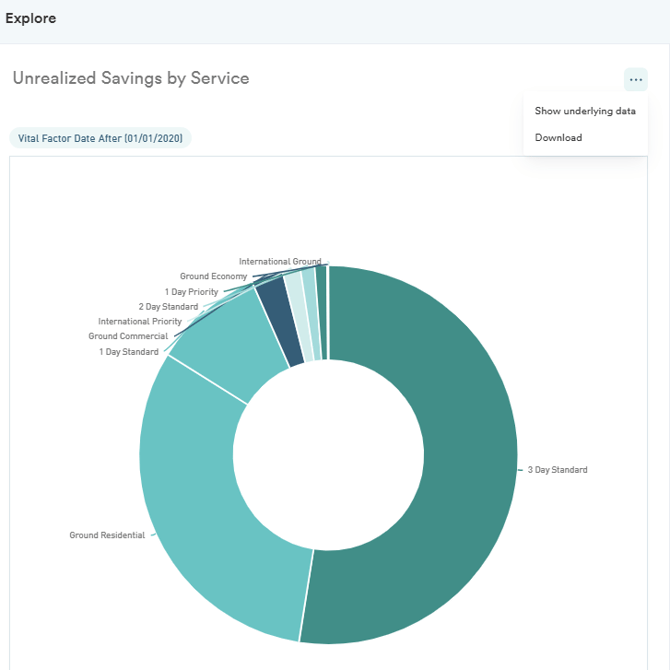
Clicking "Explore" from the three dots or ellipsis menu from the upper right of the graph will allow you to interact with the data, such as showing the underlying data and to have ability to download the report.